Aion 2 Abyss Points Guide: Every AP Source and What to Buy First
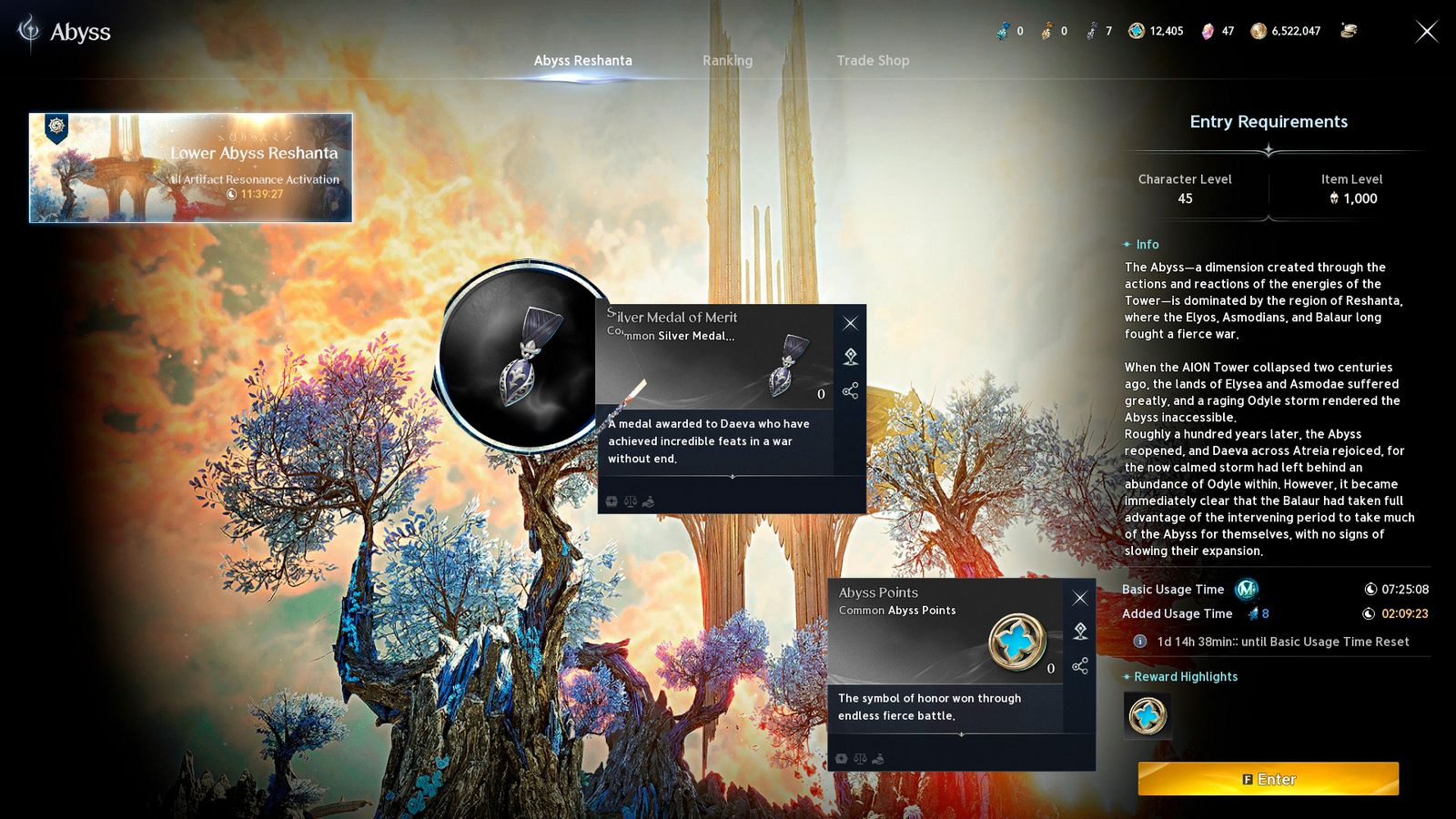
Abyss Points are the PvP economy of Aion 2, and they behave unlike any other currency in the game: you cannot farm them whenever you like. AP flows from the Abyss — the kingdom-versus-kingdom zone at the heart of the faction war — during its active windows and contested phases, which makes income a scheduling question before it is a skill question. This guide maps the whole pipeline: every AP source and its honest weight, why the Season 2 restructure killed casual solo farming, the spending order that compounds instead of leaking, and how to build an AP rhythm that survives a real-life calendar. It covers earning; climbing the rank ladder itself is the Abyss guide’s territory.
AP sources and Abyss structure below reflect the KR/TW version after the Season 2 update, which added a mid layer, spread objectives across the zone and adjusted faction-balance rules. NC has not confirmed whether the global launch starts at the Season 2 structure. Details may shift when servers open on September 30, 2026.
What AP Actually Buys
Two things, one visible and one structural. Visibly, AP purchases the Abyss gear track — a PvP-optimized progression path with its own stat distribution, running parallel to dungeon gear rather than competing with it. No amount of PvE gearing substitutes for it in serious faction combat, which is what makes AP non-optional for anyone whose lane is PvP. Structurally, your accumulated AP drives your Abyss rank — your position on the faction ladder — so every point earned is doing double duty: filling a wallet and moving a ranking. That coupling is why AP strategy and rank strategy are usually discussed together, and why this guide keeps them separate on purpose: earn here, climb in the Abyss guide.
The Sources, Weighed Honestly
Contested objectives are the core. Since Season 2 restructured the Abyss into layers with objectives spread across the zone, the serious AP flows through fighting for those objectives with a group during active windows. This is the income that scales with organization: a coordinated party sweeping the objective spread out-earns the same players wandering individually by a wide margin.
Kills are the topping, not the meal. Player kills pay AP, and a good fight night adds up — but kill income rides on top of objective play rather than replacing it. Hunting kills while your faction loses objectives is negative-sum for both your wallet and your ladder.
Events and weeklies are the floor. Abyss events and the account-limited weekly activities — including the Shugo mini-game runs, which pay AP among their rewards — provide income that does not require winning fights. For PvE-first players this floor is the realistic entry point to the gear track: slow, but real, and it spends the same.
The Season 2 lesson, stated bluntly: random solo Abyss time is the fastest way to feel busy while earning nothing. AP income is planned, partied and windowed — or it is negligible. Build your Abyss participation as scheduled events with a group, even a small one.
The Schedule Is the Skill
Because the Abyss pays during active windows, AP income has more in common with raid attendance than with open-world farming. The players with the best AP curves are rarely the best duelists — they are the ones who know their server’s window schedule, show up to the contested phases with a party, and treat missed windows as the loss they are. Practical setup: learn the window timetable in your first capped week, pick the two or three windows per week your real calendar can hold, and protect them. A sustainable partial schedule beats a heroic full schedule that collapses in week three — and if your gear needs the AP but your evenings genuinely cannot attend the windows, that exact mismatch is what our AP farming service exists to close.
Spending Order: Foundation Before Luxury
AP spending has a compounding trick that new PvP players routinely miss: the gear you buy with AP improves your performance in the very content that earns AP. That makes spending order a growth decision, not a shopping preference. Foundation first — the core Abyss set pieces for your lane, the ones that change whether you survive the objective fights. Each foundation piece raises your income rate for everything after it. Luxury later — side slots, alternates, cosmetics — once the set stands and your window attendance is banking surplus.
The corollary is patience discipline at launch: the first weeks of the global Abyss will tempt everyone to grab whatever they can afford first. Afford the right thing instead; an early foundation piece is worth more than its price tag says.
Before spending your first serious AP, write the target set for your lane and its total cost. A visible savings target is the difference between a gear track and a leaky wallet — the same trick that works for Arcana works here.
Reading Your Own Curve
AP income is honest feedback about your PvP participation, and it is worth reading monthly. Flat curve with good attendance: your group is losing objective fights — the fix is coordination or gear, not more hours. Spiky curve: you are event-farming without window attendance — fine as a floor, but the gear track will crawl. Declining ladder position with steady income: the server’s serious players out-schedule you — decide consciously whether to match them or accept the bracket. None of these readings requires a spreadsheet; the trend is visible in the wallet.
What to Do Next
AP is the fuel; the Abyss guide is the map of the machine it fuels — windows, layers, rank ladder and how a faction actually wins a phase. Read it before your first serious window. The weekly checklist slots your AP floor activities into the reset routine so the account-limited income never expires unclaimed. And if the launch-month plan is condensing into one sentence: learn the windows in week one, party up by week two, and buy foundation first — the ladder sorts out the rest.
FAQ
Next review: September 3, 2026